Thursday, August 8, 2024

Back-to-Back Race Planning: Triathlons/Events

..

Whether you’re looking to use a race as a means of focus to get fit and healthy, or the races you really want to do just happen to be a few weeks up to a month apart, training for this will require some special attention. It can be done, but you need to set yourself up with a plan well ahead of time to make sure to give yourself enough time to peak, and also rest and recover from the training necessary to make this possible.

Quite a few years ago, my first year of racing triathlons actually, I got signed up for a Full Iron Distance (140.6 miles) Triathlon, but had never even participated in a triathlon before. I knew it was going to be a lot to get ready for a 2.4 mile swim, 112 mile bike and a full marathon. So I decided to sign up for all the triathlon distances in that year (Sprint, Olympic, 70.3 and 140.6) in order to get ready for the big one. I’d been coaching athletes mostly in cycling events, road racing, criterium, and time trial, and I had a new athlete who was doing triathlons. She's the reason I signed up for the race! Luckily I had 7 months to prepare for it. With the triathlon season starting in April and my big race in July, there was the potential for multiple races happening within a short period of each other.

I look back now and can reflect, and objectively recognize and understand learning points that I gained from that experience. The amount of work I put in that year was incredible, and NOT what I would be able to do now as a masters athlete. My recovery between hard bouts was poor, and my nutrition questionable. It made me start thinking, “How do endurance athletes race events successfully back to back?” Well I learned a lot, and have been using that experience to help my athletes plan for seasons where you may have several races clumped up close to one another.

Plan Well Ahead of Time

Before you even start training for your events, you must plan out your season to build up for a big event or events. Identify which event(s) are most important to you, and which are more of just the experience event. This may be Nationals, an Ironman sanctioned event, a world championship or the local event you want to win or PR in.

Once you’ve decided, then you can address how you want to treat all your events throughout the season. Do I want to be competitive in that distance? Do I want to finish in a certain time? Are there qualification requirements to get into the race(s)? Has your nutrition and hydration been a pain point for you? Etc.

To help you organize your races/events there is this wonderful labeling system for this sort of thing. They are labeled as “A,” “B” or “C” events based on how important they are to you. You can have more than one “A” race in a year, but you have to really be sure there is enough time between them to prepare for each one adequately. More importantly, after one of these “A” races, you’ll need to recover, rebuild and then re-peak.

Lastly you need to make sure that mentally and emotionally you have committed to these race labels, not just on paper. I’ve seen athletes say that an event is only a “C,” but then their nemesis shows up at the event and they go all out, throwing their hard work and recovery plans out the door. It’s best to keep to your plan as best you can for the best possible outcome.

Manage your Load

I use the Annual Training Plan (ATP) on Training Peaks to help build a season, and it’s the perfect management system. The ATP will allow you to plan out when your build, transition, peak and recovery times will be. It will also allow you to track your amount of weekly stress and compare it to how you feel you are recovering. With that information it will allow you to figure out how much training is needed to peak for your “A” race, and any other races that may be close to it, and also how much recovery you will need to make the peak the strongest possible.

When building your ATP it is helpful if you have some prior training. This allows you to see how much training you were capable of and how long it took you to recover from it. Even if you don’t have prior info, you can still plan out your training, you will just need to be patient as it may take some time to figure out your capabilities.

Many of my long course athletes like doing an ultramarathon or marathon event during the winter or early season to help boost their running fitness. As a coach I can argue both ways if it is beneficial or not, but if it is not your main race, why shy away from doing a long bike ride the day before to simulate racing? Equally, remember that each triathlon distance or endurance event brings with it different physiological stresses that have to be trained for. What you have to be good at for long distance triathlon racing is very different from the sprint or standard distance races.

Recover Right

When you race, you are pushing your body to the limit. Things like carbohydrate storages will be low and cortisol will be higher than they would normally be. If you don’t recover properly, you could end up ill, injured, fatigued or lose interest all together. Racing is exhausting both physically and mentally, and a recovery phase can bring you back to form and feeling stronger than before.This is how we allow our bodies to adapt to the training we just put it through. Think of it this way, Build, Peak, Race, Recover, Build from a higher level of fitness, Peak higher, Race better, Recover, Repeat.

The truth is, no matter how much pre-planning you have made, you can never fully estimate how you will fare after the event, especially if the event in question is long distance. When you are racing back-to-back events, don’t have unrealistic expectations of “smashing” each race. Treat the race with the priority it deserves based on your goals. Then the recovery process becomes much easier. Most importantly, listen to your body, not your ego. Your body may need more recovery than the plan gives, you’ll need to let your coach know and adapt the program as necessary.

Equally, if you have decided to train straight through one race to your next event, do exactly that, put in the big overload sessions as planned. Don’t shy away from them because you are tired. You had planned to be! Stick to your annual plan.

Often doing some familiar workout loops can help you compare yourself using time, speed, power or RPE. Your local loop lets you know how well you are feeling and performing so you can gauge your fatigue and overall performance level better.

Pay Attention to Signs of Over-Fatigue or Injury

I can’t say this enough, listen to your body. If you feel a niggle, address it, talk to your coach, don’t just follow the plan blindly. All aches and pains are information, and this information is useful. If you keep on struggling to hit targets, you may be going too hard too soon, or it may be time for a recovery week. Maybe you are more tired than you anticipated being at this point in the year, maybe your nutrition is in need of a check in. Make sure you bring this up with your coach, don’t just keep following the plan without saying something.

When you're training for these goals, you’re putting stress on your body, and it needs to be given time to recover. This will allow you to look at what you were doing, see if it was enough or not enough, and you can learn something new about yourself in the process.

Going back to my first year of racing and all the events I did within a 2 month span - I recall even now the comment of a teammate that I obviously heard but for whatever reason chose to ignore - probably because I was 35 and invincible - ,“Are you eating enough and getting enough recovery?”

Summary

At the end of the day, if you have plenty of time between events, you will want to reset and rebuild into the second event. However, if you only have a few weeks between your big events, you’ll most likely need to favor one over the other, and that would be something you went over with your coach in your annual training planning meeting.

The period in between two back-to-back races can literally make or break your season, so you’ll have to pay attention to both your training data and your body's overall energy or fatigue then make your decision based on both of them. This is where a coach can really help you through giving an objective perspective to help you keep on track for your “A” race(s).

Tuesday, July 16, 2024

USAT Multisport National's Races

..

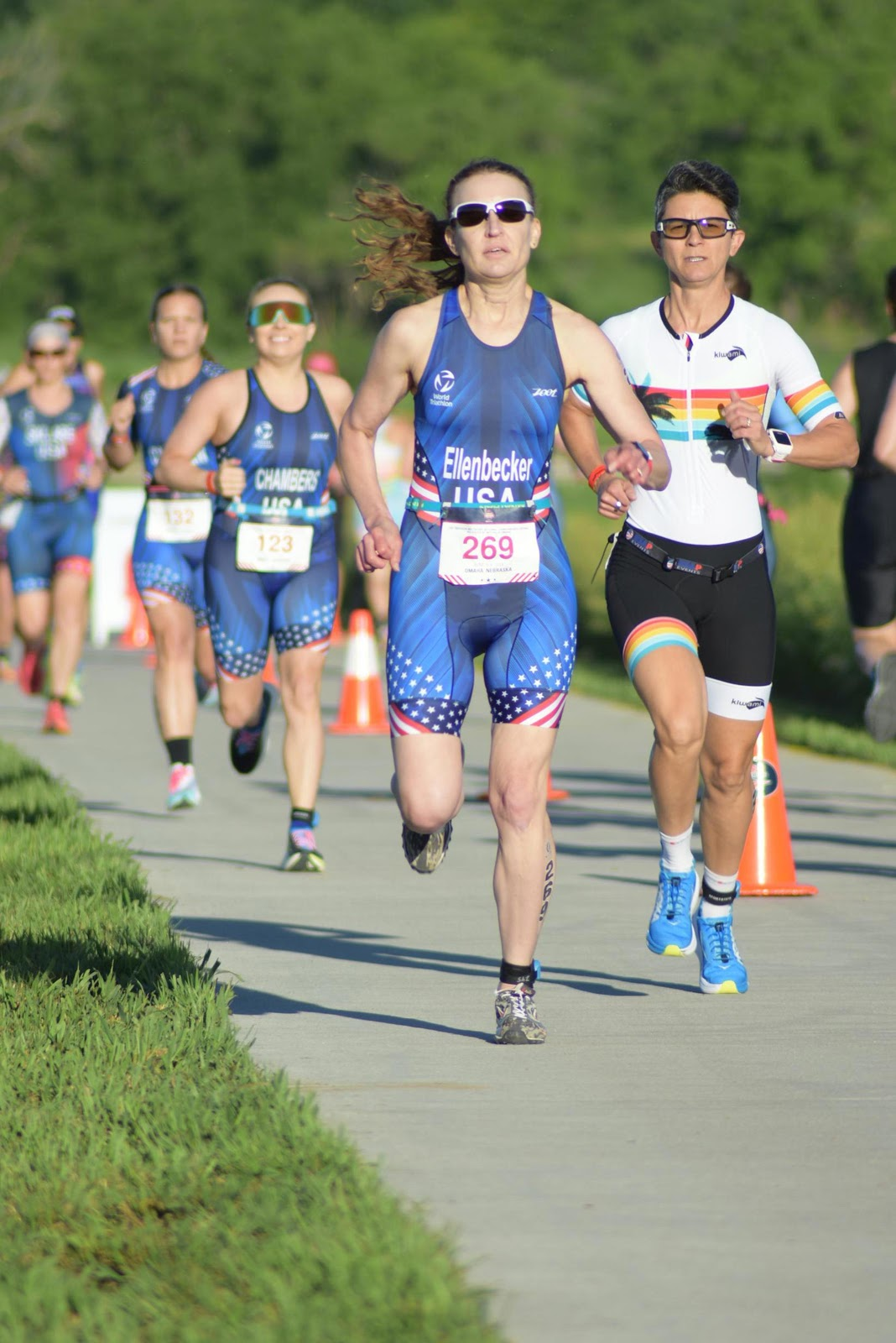
Sitting in my hotel room in Montreal a week after competing at Multisport Nationals in Omaha, NE, I'm still beaming with excitement. It's been several years now since I competed at something more than a local event. Actually, 2019 was the last time I went to Nationals, and now I have returned again in 2024.

This time they combined Duathlon with Aquathlon, Draft Legal Sprint Tri, Mixed Team Relay Triathlon and Duathlon. It is now called Multisport National Festival, and a festival it was. There were a total of 11 events to compete in, and anyone who signed up for 5 or more would receive a Masters of Competition Buckle. Being that I don't swim, currently, I was not able to sign up for enough events to get a buckle, but to be honest I really didn't want one. 

This year's events that I signed up for were the Non-Draft Super Sprint Time Trial Duathlon, long name - short race. I also signed up for the Draft Legal Sprint Duathlon, and the Mixed Team Relax Super Sprint Duathlon. You must be wondering, what in the world are those? Let's start with Duathlon. The races are set up so you start with a Run, then Bike and end with another run. The Super Sprint distance was 1 kilometer sprint/run, 5 kilometer bike and ended with another 1 kilometer sprint/run. Yep, you can imagine this one is blazing fast. Done in under 18 minutes, and redlining it from the moment the whistle blew. 

The Draft Legal Sprint Duathlon was a little longer, but still just as intense, effort-wise.. This event starts with a 5 kilometer run, followed by a 20 kilometer bike which is draft legal, meaning we can work off one another, and finishes with a 2.5 kilometer run. When I talk about draft legal, that means that when you are on the bike you can draft off other riders, meaning you can get closer than in non-drafting events where you must stay anywhere from 3-6 bike lengths away depending on the rules of the race.

The Mixed Team Relax Super Sprint Duathlon was the same distance as my first race 1k/5k/1k but we had 4 people doing the exact same race then tagging the next until all four of us finished. The relay is supposed to be 4 people within the same 10 year age category, but there were not enough teams for my age category and 3 people from 2 age groups older than me needed one more woman, so I got assigned to the 60-69 age group. This race went male-female-male-female, and I was the anchor.

Back to the first day of the Multisport Festival my teammates and I all purchased the VIP tent passes for the week. Let me tell you that was the best thing we could have done. The venue itself didn't have many shady spots, nor did it have many comfortable spots unless you brought your own cushions, etc.. The VIP tent provided couches, a nice tent to keep us all shaded, ice cold refreshments, breakfast, lunch, coffee, and in the evenings beer and wine, though not many people took part in that until the last night. The VIP tent also had an on site massage therapist (for extra cash), and Hyperice Normatec Leg compression units for us to use as needed. Because the VIP tent was accessed only by wrist band, we felt safe enough to leave our bags in the tent. This came in handy when we wanted to go walk around the rest of the venue, go grab our bikes from transition, or go to our races. They even had secure bike parking in VIP. The best part about VIP is it sat right at the finish line, so when our teammates would be coming through we could see them and cheer them on their final, exhausted steps until they finished. 

Each morning before the day got started my teammates and I would ride the 3.5 miles from our AirBnB to the race venue, settle down in VIP, and mentally prepare for our events. My first event was on Thursday at 7am. I do love an early morning race, no time to sit and get nervous or overthink. Just get up, and get going. The Super Sprint Time Trial was my first event (1k/5k/1k) and they sent us off in groups of 3 in a rolling start with about 5 seconds between groups. This was due to it being a non-draft legal race and being on such a short bike course they needed to spread us out otherwise there would end up being drafting by default. As soon as the whistle went, I was like a slingshot, taking off at warp speed. I knew I wanted to get out front as quickly as possible and didn't want to get held up by any potential slower riders.

At the turn around for the first run, I looked at my watch to check my heart rate as I felt like I was definitely pushing hard. To my surprise it was not as high as I expected, but my pace was faster than I expected. I was keeping about a 6:20 pace with a 160 heart rate and feeling like I could maintain that intensity through the bike no problem. The transition was a long point to point transition so everyone's T1 & T2 were long, but I made it out on the bike in a good position, held that position through the bike and onto the second run. I was feeling pretty gutted by the time I hit the turn around on run 2. Again I looked at my watch to see my pace had dropped to 6:40 and my heart rate was now pushing 170. This is to be expected as I was nearing the end of the race and had been trying to maintain as much redline as I could for this short race. In the end I felt like I finished strong and I took 2nd in my age group, with my teammate taking 3rd. My finish also got me a 3rd place finish in the Masters Category (someone in two age groups older beat me by 2 seconds for 2nd place).

I got to enjoy Friday off and watch my teammates do their Sprint Tris and Aquathlon's. Everyone did really well in their respective events. I may have even been inspired to consider doing an actual swimming event next year. Maybe. We will see. LOL. My teammates and I ended up spending the entire day at the venue, so by the time we all got back to our AirBnB we were pretty tired. But first dinner. Let me tell you, you’ve never seen a kitchen get so busy than when you have 5 athletes cooking dinner at the same time. The amount of food, messes, bumping into one another, and laughter made it all worth it. At that point we all pretty much decided we would like to come back next year and stay together again. 

Saturday, the day of my draft legal race, we all could feel the humidity rising. This time my race was not the first on the day, we started about 10am. This in combination with my forgetting to bring my own electrolytes turned out to be a bad thing for me. This race was just long enough to be affected by my lack of electrolytes in my daily intake, and in my race fuel. I started off with the 5k moving quite well, though I knew I needed to keep a little in the tank so backed off the pace after a mile in.

I wanted to stay close to the front pack in hopes of being able to draft off them during the bike. This didn’t happen, since they were all running at about a 5:50 pace, and I was running at a 6:50 pace. I got out on my bike for the draft legal 2 lap course with 2 women just seconds in front of me and 3 more just seconds behind me. I worked my butt off to catch the first woman in front of me, telling her to get on my wheel and let's go catch the other woman up the road.

That move helped us three get away from the following group. We were able to stay together on the first lap, sharing pulls every 30 seconds. But on the short climb on the second lap we fell apart. With no one else to work with, the 3 of us had to do about 5k on our own with no help. But the time I got into transition I could feel something was wrong. My right leg was starting to get pins and needles. I only had 2.5k left to run so I shook it off and took off on the course at the turn around I felt my foot going numb and my quad starting to get muscle spasms. I kept trying to run but started to feel like I was going to trip so it became a weird wobble-jog.

By the time I crossed the finish line my pace had slowed by over a minute on my pace, and I lost 3 overall positions in the last kilometer, but luckily no positions in my age group. Turns out I was dehydrated and low on electrolytes. That actually came as no surprise since I had left my electrolytes at home and was not enjoying the Gatorade they had for use at the venue. This right here is one of the biggest things I stress with my athletes, remember your nutrition/hydration especially if you can only use certain ones. It took me 4 Gatorade bottles and 2 water bottles and 4 hours before I was able to go pee. That was a position I never want to be in again, and caution to my athletes to not get there. Even with the dehydration issue I still held on to 2nd place in my age group, for another podium finish, with my teammate on the 3rd step again.

We went out to dinner that night, I still had one more race the next morning at about 10am again. We went to the best steakhouse in Omaha, Brother Sebastian’s in an old monastery. I enjoyed half of my 8 ounce steak and sauteed mushrooms, plus my sides of wild rice, and a salad.

The next morning we all got up early and headed over the the race venue for the last day of races. All my teammates had the Mixed Team Triathlon Relay first, then when they were all done my Mixed Team Duathlon Relay race got underway. My group consisted of some very accomplished 60+’s, all of whom have not only podiumed at their age group and younger age groups, but have gone to the World events as well. We had a pretty good team but my age put us in a lower age category than they should have been in. No matter, we all put forth a wonderful effort. The first 3 racers set me up for a wonderful finish, bringing me close to the next 2 teams in front of us and I was able to pass both of them in the last half kilometer before the finish moving us up 2 places in the overall finish. Our team took 7th overall and 3rd in our age category. 

In all this was a great event. I plan on going back next year, as do all my teammates. We all also know that the bike course was not flat as we all were told. This means a slight bit of change for the bike training next year, working in short climbs and rolling in terrain more. Also something I learned was that I really need to not just double but triple check my luggage and make sure I have my nutrition stuff that is of the utmost importance. I do not want to suffer again like I did this year.


Tuesday, May 14, 2024

Heat Stress on Summer Training


What is Heat Stress?


Cycling in the heat causes a number of physiological changes that seriously affect your performance, such as an increase in heart rate, core body temperature, skin temperature, sweat rate, and blood lactate — none of which is beneficial to performance. When your heart rate rises, for example, your body has to work harder to push the same amount of power into the pedals.

Exercising in the heat isn’t just hard , it can also be extremely dangerous. Your core body temperature and hydration status are two internal barometers that won’t change much before you can become incapacitated. A study from the Journal of Applied Physiology* looked at the effects of dehydration and hyperthermia as they put trained cyclists through a series of four max-effort cycling tests in varying conditions. With a 1°C increase in core body temperature, hyperthermia, caused a 16% reduction in VO2max, in addition to reduced oxygen uptake and a significantly elevated maximal heart rate.

Another study** showed that cyclists can experience a 4-5°C increase in core body temperature during a sub-hour time trial effort in the heat. In all of these studies, heat stress and power output are negatively correlated. In other words, as the body heats up, power output goes down.

However, being well-hydrated, acclimating to heat and humidity, and having high aerobic fitness, you can decrease the effects of heat stress on your body and your sport performance. This helps explain why a ride at the end of August can feel a lot different than a ride in June. By the end of the summer, your body has had time to adapt to the hot and humid conditions, therefore improving your performance in the heat. So what can you do to beat heat stress disruption in your training?


Top Ways to Mitigate Heat Stress

1. Fluid Ingestion

Drink cold fluids before, during, and after a hot ride. Cold fluid ingestion is especially helpful because it keeps you hydrated, maintains blood volume, and lowers core temperature simultaneously. With fluids you need to have a good mix of water and electrolytes. When too much water or sugary drink dilutes blood sodium levels, your body is headed toward hyponatremia, a dangerous and potentially fatal condition. This is especially important for women in peri and postmenopause and women in the luteal stage of their cycle, as they have a lower volume of water in their body and a more rapid rise in core temperature during the early stages of exercise.

To avoid hyponatremia, you will need to practice the concentrations of your drinks, everyone is different. I can’t just say drink to thirst, as peri/postmenopause women have a decreased thirst drive even though they need more fluids, and for everyone else you are not all the same, nor do you require the same amount of fluids. I can say that according to Dr. Stacy Sims, the leading researcher on all things womens physiology and exercise, recommends to use a mix of 4% carbohydrate (about 7-9.4 grams), Sodium 180 to 225 milligrams, and Potassium 60 to 75 milligrams per 8 ounces of water. If you notice the amount of sugar is much lower than many off the shelf sports drinks, they come in at about 5 to 9% sugar, and some even higher. The reason we avoid this high concentration is that it can cause gastric distress. The intestines will not be able to allow the passing of your drink through your intestinal walls with that concentration so then fluid will just sit there. Sitting there feeling heavy and causing your core temp to rise, and performance to decrease, all the while inching closer to heat stress that is dangerous.
 
2. Aerobic Fitness

A 2019 meta-analysis*** on heat stress concluded that aerobic fitness was a highly effective strategy for heat stress mitigation. This speaks worlds about your base fitness levels, and what that means to the importance of overall fitness. Your body is extremely strong and resilient when it is aerobically fit — oxygen is flowing, mitochondria are operating at full capacity, and your heart is pumping blood to the muscles efficiently. This is a great reminder that aerobic fitness (Zone 2 training) is important year-round, not just in the off-season.

3. Pre-Exercise Cooling

You don’t need a fancy, special-made ice vest like what you may see from a World Level Athlete to stay cool before your race. Pre-exercise cooling includes anything that you do to cool your body. This can be as simple as moving from the sun to the shade during your warm-up, drinking ice cold water, or putting an ice sock down the back of your shirt. My favorite cooling technique is to freeze a handheld water bottle the night before a run/ride. When running you get to carry it in the palm of your hand which feels great. When running you can hold it to your neck as needed, or stick it down your shirt for cooling. That same handheld bottle can go in the back jersey pocket while riding. You can also buy some cheap pantyhose, fill them up with ice, tie them off, and shove them down the back of your jersey before the start of a training session.
 
4. Heat Acclimation

One study**** showed that just 10 days of heat acclimatization improved time trial performance, power output, plasma volume, and maximal cardiac output in both hot and cool conditions. Most studies find that 9-12 days of heat acclimatization training is the minimum amount necessary to earn physiological and performance adaptations.

Athletes should aim for easy sessions (~50% VO2max) lasting 60-90 minutes in hot temperatures 80+F. Depending on where you live, you might be able to go outside for an easy ride or run in these conditions. But for those in cooler climates, you can simulate hot and humid conditions by riding indoors without a fan or even with the windows closed.

You don’t need to be doing heat training rides every day, however. Just two to three workouts in the heat a week over the course of the 2 weeks is enough, in most cases, to build the adaptations. You’ll quickly realize that even at an easy Zone 1 power output, your heart rate and RPE can climb into the upper Zones. On the days when you are doing a much harder workout, try to do it at a cooler time of day. We all know this isn’t always possible, so understand that if you do have to do your hard workout in the peak of the heat, your performance will be lower than you know you can do, until you have acclimated to the heat. To be safe it’s best to back off on either the intensity, or the number of intervals when you haven’t had the time to properly acclimate.

5. Skin Protection

This isn't heat acclimation per se, but damaged/burned skin can have a detrimental affect on your performance in the heat. When our skin burns it loses it's ability to function properly and thus both cooling and heating will be affected.  This happens because burns can damage...
  • Blood vessels, which can make it difficult for the body to control temperature
  • Sweat Glands, which can make it difficult for the skin to cool through sweating
  • Skin surface area, burns reduce the amount of skins surface area that can release heat
All that is to say protect your skin from sun burn damage. Use UVA and UVB sun blocks, use special clothing to protect you. Do whatever you can to protect your skin from damage.

To wrap things up, remember to have plenty of fluids on board before, during and after your workouts. Give yourself some Zone 2 training in the heat, and make sure your Zone 2 is strong. Be patient as the adaptations can take up to 2 weeks or longer to start feeling stronger at the higher intensities. Don’t forget when going hard, you need to keep your core temp down, precooling and during exercise cooling are your friend.

If you are interested in deeper science stay tuned for a follow up to this blog post.


References

*ArngrĂ­msson S.A. et al. (2003). Relation of heart rate to percent VO2 peak during submaximal exercise in the heat. Retrieved from https://pubmed.ncbi.nlm.nih.gov/12391114/

**Racinais, S. et al. (2020). Core temperature up to 41.5ÂșC during the UCI Road Cycling World Championships in the heat. Retrieved from https://hal-insep.archives-ouvertes.fr/hal-02569281/document

***Alhadad S.B. et al. (2019). Efficacy of Heat Mitigation Strategies on Core Temperature and Endurance Exercise: A Meta-Analysis. Retrieved from https://pubmed.ncbi.nlm.nih.gov/30842739/

****Lorenzo, S. et al. (2010). Heat acclimation improves exercise performance. Retrieved from https://pubmed.ncbi.nlm.nih.gov/20724560/

Tuesday, April 9, 2024

Endurance Sports: Building Your Training Plan for the Year


As you may have figured out by now, I have been sharing lots of information about training for women specifically in peri and post menopause. Historically they have been left out of research, access to sport and even consideration for inclusion not to mention no information on how to train when the body and hormones are changing. It's highly important for me to share this information as this group is in dire need of movement in all the ways they can get it. This blog entry however, is about general population plan building for endurance sport athletes. This is not to say peri and post menopause women can't use this information, it just means once you get through this, there will be need for further adjustments after you've completed your plan.

Selecting Races/Events, Understanding Limiters

When planning for endurance sports, there are so many irons in the fire we need to keep in balance it may seem nearly impossible to know how to build your plan. I like to start by having my athletes fill out a year calendar, plot out a few races or events they want to do, then sit back and think on it for a bit. Once my athletes are sure this is what they want, then we can start.

Next step is to decide what your priority/A race is, this is the race you really want to do and or do very well at. You may have a couple of these but not all of your races should be signified as an A race.

The race schedule is up, your priority race(s) are chosen. Now we need to talk about limiters. Limiters are goal-specific weaknesses that decrease the chances of accomplishing a race/season goal. An example would be; you want to place well at a race that is very hilly, but you don't climb hills well. However, not all weaknesses are limiters. Let's say your weakness is hill climbing, but your race is pancake flat, your weakness will not be a limiter for that race.

How do you know what your limiter is? You have a limiter when your weakness matches up with the demands of a race. Once you know your limiters, you will be able to plan workout types based on abilities required to make progress toward your goals.

Periodization

We now need to understand the different periods of the year, otherwise known as periodization. This is how you break up your training segments of the year. These segments are Prep, Base, Build, Peak &Race (Taper), and Transition or Offseason.

Prep lasting about a month, is the first step and it consists of doing light exercise for fun. Using this time to focus on other sports, and in addition building up a good foundation of strength and mobility.

Base can last 2 to 3 months and focusses on low intensity, high volume training to build your foundation of aerobic endurance and durability. This prepares the body for the next phase, Build, where higher-intensity work, focusing on heart rate, power and paces where you are kept just under lactate threshold happen. This is also a good time to plan in some skill work, and start looking at your fueling needs to start creating a nutrition plan.

Build can last another 2 to 3 months depending on the length of your event. Here the focus shifts from aerobic volume building to increasing intensity and working on your specific limiters. Early on the focus will be adding intervals near lactate threshold, and steady state tempo workouts. As this phase progresses, higher intensity intervals at suprathreshold to maximal intensity is added to improve force, power and anaerobic capacity. You should also focus on course specific training. For example, hill repeats for hills races. Lastly is dialing in your fueling here is critical, and shifting your strength training from strength and power building to maintenance.

Taper which is two phases Peak and Race usually happened about 2 weeks out from your event. This taper phase involves decreasing workout duration and total volume, by anywhere between 20 to 50 percent decrease per week leafing into your event. Race specific intensity should be maintained in your workouts, but putting a rest day or two between workouts is key to keeping you sharp and not overloaded before your event. You are trying to maintain the fitness and decrease fatigue in order to optimize race performance.

Transition/Offseason

What happens after your event/race? That depends. In general 5-7 days of pure recovery is necessary, with even longer at the end of your season. If the time between races is several months apart, move back through base and build periods according to your needs. You should focus more on base for longer races, and build for the shorter ones. And if that's it for your year, recover for several weeks, prepare for a pew more then begin the cycle again.

However you choose to break down the phases, periodization can help you build fitness, decrease the odds of burnout and injury, and maintain motivation. I hope these guidelines help you plan for your next race/event season.


Tuesday, March 12, 2024

Anxiety During Peri & Post Menopause


When I’m road cycling, I’ll find myself randomly braking on a long fast descent where I used to just bomb down it with gleeful excitement. During my commute home, the reckless driving I see others do will cause me to freak out and before I know it my heart rate is racing, my breath is short, and I feel like I’m about to have an anxiety attack.

If you’re like me, you may have started to notice more often a swift increase in heart rate, maybe some shortness of breath and that feeling of impending doom with just the slightest fear, or maybe it just came out of nowhere. Your mind starts circling about who knows what, but instead of calmly letting it go, you feel that anxious sensation you didn’t used to feel. You brush it off to a busy stressful life. But wait, did you know that is a symptom of changing hormone levels associated with peri and post-menopause?

“Women will say they just thought they couldn’t cope, or they were getting stressed, or they just started dropping balls. They don’t realize it’s menopause. They blame themselves and think it’s their fault. It’s not your fault,” according to Dr. Clare Spencer, Clinical Director of My Menopause Centre. Listen to her interview with Selene Yeager on the podcast Hit Play Not Pause.

First thing women need to understand about hormonal fluctuations, as happens in perimenopause, then the near absence of hormones in postmenopause, all manner of symptoms can crop up. Dr. Spencer explains how estrogen has a very important role in our brain chemistry as it helps coordinate the neurotransmitters like serotonin, dopamine, GABA, and others that affect our mood. Before perimenopause, our ovaries produce estrogen each month, through a rising and falling system in combination with progesterone. However when our transition begins, aka perimenopause, estrogen fluctuates quite erratically between its highs and lows and can have a more pronounced high and more pronounced low. These changes can cause anxiety to hit you when you least expect it.

In addition to the estrogen dropping, cortisol, which is released at times of stress, can rise, and that keeps your body in a bit of a heightened state of excitement or anticipation. Research shows about half of women suffer from “unspecific anxiety” (meaning you don’t have a specific reason to be freaking out inside) during the menopause transition.


Can You Find Your Inner Calm Again?

First you have to understand that treating your anxiety isn’t going to look exactly like anyone else's treatment. Remember, if one treatment doesn’t work after enough time, try something else. You’ll notice there are many people talking about mindfulness, adaptogens and lifting heavy. These are all important and a great place to start, you don’t need a doctor's prescription for any of this and they all have a low cost of entry.

However, some of us may need a little more help to get through it. This is where Hormone Therapy (HT) comes in handy. First thing you need to know is your general practitioner, nor your OB-Gyn is knowledgeable in peri and postmenopausal symptom treatment. They received no more than a day's worth of training on it during their years in school. This is to say, you need to find a SPECIALIST, someone who has gone the extra step to learn about the physiological difference and requirements of women in the peri and post menopause stages of life.

Admittedly, the research is a bit mixed (due to lack of studies, poor studies, not enough money being set aside for this research, etc…) on what used to be called Hormone Replacement Therapy (HRT), now referred to as Hormone Therapy (HT). This is because we cannot replace the hormones lost. Instead we are trying to keep things at an even level, avoiding the massive peaks and valleys that can cause the nasty symptoms we all deal with to different degrees.

The hormones we are talking about are Estrogen, Progesterone and even Testosterone. I’m not going to get into what you would need, or even the best way to take it, oral, gel on skin, internal. That is up to you and your specialist. If you don’t have a specialist, I would highly recommend checking out Midi Health. I recently started going through them for my perimenopause symptom issues and in my fist 30 minute visit I got more out of it than years of talking with my GP.

Something to note is that testing your hormone levels isn’t useful either. The hormones in our bodies are literally fluctuating daily and hourly. What IS important is that you track your symptoms with as much detail as possible (time of day, length of symptom, food that may be associated with the spike, etc.). All these details will help your specialist create the right plan for you.

Mindfulness and Therapy Can Help

You may have heard of Cognitive Behavioral Therapy (CBT). It seems to be the go-to now for anxiety issues. Mindfulness can significantly lower stress, not just in the moment, but also can have long-term stress benefits when practiced daily. It can take some time, ranging from 6 to 9 months before you really notice a significant difference.

What About SSRIs?

Selective serotonin reuptake inhibitors (SSRIs) and/or serotonin and norepinephrine reuptake inhibitors (SNRIs) have been shown to help manage anxiety. SSRIs and SNRIs can also provide mild to moderate relief from night sweats and hot flashes. Knowing whether to utilize HT or SSRI is based on your symptoms. If your symptoms are more physiological in nature, hot flashes etc then HT would be the route. If your symptoms are of clinical anxiety and or depression then SSRI would be the way to go. Then there are the few of us who may need both.

Adaptogens?

Alternative therapy such as adaptogens like ashwagandha can help increase your durability, or put another way, your resilience to stress. When it comes to these types of herbal therapies, the research isn’t as solid as with western medicine studies. Though there is still some good evidence out there on this.

Though there is not the same level of hard research on herbal therapies as there is on pharmaceutical therapies, they are not without scientific evidence, and a February 2023 review on ashwagandha reports that studies suggest the adaptogen may help in the treatment of sleep disorders, improve stress resilience, and reduce anxiety. A side note from it, evidence also suggests it can be helpful for hypothyroidism, so you shouldn’t take it if you’re on thyroid medication.

As with any alternative therapies, it’s important to do your research to know what you’re getting. These industries are poorly regulated and you aren’t given the full details of what you are actually getting. Resources I use to find out whether a product is living up to its promises, are Labdoor.com and ConsumerLab.com. These resources are reputable, and do independently tested supplement brands.

Lifting Weights for Stress Relief

I know from first hand experience that when I do my strength training consistently and with good focus I feel a big difference in my mental and emotional happiness. Good news there is science here, to back this up as well.

Scientific Reports found that regular weight training substantially reduces anxiety. The study involved younger adults (of both genders) who were in good mental health, no specific anxiety disorders, and had positive results. The participants who lifted twice a week for eight weeks scored about 20 percent better on tests of anxiety than their peers who didn’t follow the weight training plan. While this study does focus on younger adults, I’m hopeful this will spur more age-specific studies.

Wrap Up

The best advice I can give, you shouldn’t be suffering. Try something, seek help, try multiple things. Don’t give up. There is something out there for everyone. Just remember what works for your friends might not work for you. Keep trying until you and your specialist have found what works for you.

Sunday, February 11, 2024

Guide to Macro Nutrients & Timing for the Endurance Athlete

Events vary, as do athletes and your everyday health-conscious exerciser. So, it should be no surprise that one’s nutritional needs are not a one-size-fits-all solution. Factors to consider include weekly exercise expenditure requirements, body weight, environmental conditions, and nutrient timing. 

Each person will have different needs for different events. Finding the best solution may involve starting with basic nutrition recommendations. If they don’t supply the desired results, modify them as needed. Finding the best diet is often a trial-and-error process. 


Nutrition Basics:

  1. Get most of your protein from animal sources (skinless chicken, turkey, and fish) unless you are vegan/vegetarian. If vegan/vegetarian you will need to increase your protein intake to make up for the incomplete protein molecules in vegetables from your diet. 


  1. Timing: EAT Breakfast! Have ⅔ of your calories in the first ⅔ of your day. Dinner should be small but complete. Try to space out your food so you are having about 300-400 calories every 3 hours. For peri & menopausal women those needs are increased to 500+ calories per balanced meal 3x a day, plus nutrition before/after workouts.


  1. Make sure to have Prot/Carb/Fat in each meal, and a big dose (30-40g for Women 40+, 20-25g for all others) of protein immediately post-workout. For women, adding EAA’s (especially Leucine 3-4g) and creatine (3-5g) to your daily intake is highly advised. 


  1. Eat whole grains & Starchy vegetables: Quinoa, Whole Grain bread or crackers, cauliflower, broccoli, colorful potatoes, and lots of dark green leafy veggies. Eat your fruits, don’t drink them unless it’s during exercise/competition.


Macronutrients are the basic components of the food we eat. These are carbohydrates, protein, and fat. 

Eating macros in proper ratios fuels your endurance and strength training protocols. Healthy “adult” (aka college age men) eating includes ratios of, 45-65% of calories from carbs, 20-35% of calories from fat, and 10-35% of calories from protein.


Adjust these ratios based on the goal of the physical activity. For example, when training for endurance an athlete would increase their carb percentage to improve muscle glycogen stores. When training for strength, an athlete would consume a higher protein intake to help rebuild muscle fibers to better support more muscle mass. The numbers for most people would then look like 40% Carb, 30% Protein and 30% fat. 


Carbohydrates: 

Carbs come in different forms. Two to know are simple and complex carbs.

  • Simple carbs, also known as simple sugars, have one to two sugar molecules. These include glucose*, dextrose, or fructose. Simple carbs break down quickly in the body. Foods with simple sugars include fruits (grapes, watermelon, stone fruits), milk, vegetables, table sugar, candy, and soft drinks. They supply energy but lack fiber, vitamins, and other key nutrients.

  • Complex carbs have three or more sugar molecules. You'll find these in foods like beans, whole grains, whole-wheat pasta, colorful potatoes, corn, and legumes.


So, what kind of carbohydrate should you consume? Most carbs should come from complex sources and naturally occurring sugars. Processed carbs and refined sugars should be limited to racing and hard training sessions, or avoided if your body has trouble using it.


How many carbs should endurance athletes eat?

There will be some differences based on the type and duration of training. The general rule is to increase carbohydrate intake up to 70% of total daily calories. This helps support the high volume of glucose needed for that level of physical activity.

Endurance athletes should eat 8 to 10 grams of carbohydrate per kilogram (kg) of body weight per day. This will depend on the duration of their endurance event. For endurance training lasting 4 to 5 hours, endurance athletes should consume 10 grams per kilogram of body weight, this is based on healthy young men and does not include recommendations for women, and especially peri& postmenopausal women. Instead, according to Dr. Stacy Sims, women should follow: 

For light days, rest days  or strength training days aim for 1.1 to 1.4 grams of carb per pound of body weight per day.

For Moderate to high-intensity training (60-120 minutes), you need 1.6 to 1.8 grams of cab per pound of body weight per day.

For endurance training of 2 to 5 hours of intense training per day, you need 2 to 2.7 grams of cab per pound of body weight per day.

For extreme training of 5 hours or more of intense training per day, you need 2.7 to 3.1 grams of carbs per pound of body weight per day.


How Much Protein Should Endurance Athletes Eat?

Many people focus only on carbs for endurance exercise. However, protein intake for endurance athletes is equally important. The purpose of protein is to build and replenish lean muscle tissue. Protein also acts as a source of energy in times of caloric deficits.

There are two different types of protein:

  • Animal-based protein

  • Plant-based protein


Animal-based protein, as the name implies, is a protein that comes from animals. It can come from the animal’s body, such as a cut of beef or fish filet. Or it may be a protein food they produce, like cow’s milk or an egg. This type of protein is considered a complete protein. It is complete because it contains all nine essential amino acids. 

Plant-based protein is a protein that comes from plants. This type of protein can come from the plant’s leaves and roots, or a fruit or nut produced by the plant. Plant-based protein is considered an incomplete protein. This isn't to say it is bad, it just doesn't have all essential amino acids. Plant-based protein sources include edamame, chickpeas, spinach, broccoli, chia seeds, quinoa, hemp seeds, and peanut butter. Endurance athletes on a plant-based diet will have an increased protein requirement. This is due to a plant-based diet consisting of incomplete proteins.

Protein has 4 calories per gram. How much protein do you need to eat?  Protein intake for a normal healthy adult (again these guidelines are based on research done solely on young males) is around 0.8 grams/kg/day. Endurance athletes should eat protein at 1.4 g/kg/day. Athletes taking part in longer endurance events need more protein than those running shorter distances. This is based on research done on healthy young men and does not include recommendations for women, and especially peri& postmenopausal women. Instead, according to Dr. Stacy Sims, women should follow: 


For strength/power phases of training, you need 1.0 to 1.2 grams of protein per pound per day.

For endurance phases of training, you need 0.8 to 1.0 grams of protein per pound per day.

For optimal recovery, try taking 35-40 grams of protein immediately post-workout, or within no more than 30 minutes after to take advantage of the non-insulin-dependent first phase of glycogen synthesis. In addition to the 35-40 grams of protein immediately after a workout, peri & postmenopause women need to make sure there are EAA’s (essential amino acids: Leucine, isoleucine, and valine) with a 3 to 4 gram content of Leucine, and creatine in a 3-5g amount.


How Much Fat Should Endurance Athletes Eat?

Endurance athletes need healthy fats in their diet. Roughly 30% of one’s daily calories should come from fat when involved with endurance exercise. 

Dietary fat has six major roles in the body: Supply energy; Help manufacture and balance hormones; Form cell membranes; Form the brain and nervous system, Transport fat-soluble vitamins (A, D, E, and K); Supply two fatty acids the body can't manufacture (linoleic acid and linolenic acid); There are many types of fat, some good and some not. The most significant types are triglycerides, fatty acids, phospholipids, and cholesterol. Of these, triglycerides are most commonly found in food. Fatty acids break down further into saturated, monounsaturated, and polyunsaturated fats. 

Endurance athletes need to minimize the amount of saturated fat consumed. Most fat calories should be in the form of monounsaturated fatty acids.

When adding fat to your diet to keep up with the demands of endurance training, focus your fat intake on healthy fats. This includes: Fatty fish - salmon, mackerel, or tuna; Avocado; Seeds - sunflower, sesame, and pumpkin seeds all have healthy fats; Nuts - peanuts, walnuts, almonds, or cashews; Olive oil; Eggs; Ground flaxseed; Beans - kidney, navy, or soybeans.


Nutrition for Endurance: Bringing it All Together

Balancing one's nutrition is not an easy task, involves a lot of thought and trial and error. But when endurance athletes pay attention to the recommendations and figure out what methods work best for them, the outcome is improved athletic performance. This can translate to higher awards come race day.

Whether you are an elite athlete, a weekend warrior, or a personal trainer designing programs for athletes, it is important to fuel your body properly. Proper nutrients at the right time allow the body to perform at its highest level.


Mobility: Often misunderstood, yet it is the Building Block of Movement

Why are we talking about mobility so much lately? Some people lump it in with stretching/flexibility, or think it is stretching. That is only part of the equation. First let’s define flexibility, the ability to have an outside force applied to a part of your body and that force moves your body part into a position where you feel a stretch of your muscles. This is what we call a passive stretch. Whereas mobility is your ability to control and move your body/joints through a certain range of motion with strength, thus an active movement. In most cases we have more flexibility than we have mobility. Meaning we can be passively moved into a deeper range of motion than what we can control actively.


Why do we stretch? 

Most people believe it is to become more flexible. That depends on the reason you are stretching, and the process you are using. When done with mobility principles, stretching can change muscle length, joint strength and control, and neurologic control. When done with dynamic stretching principles, it can help prep the muscles for the activity you are about to take part in.


The Science

For quite some time stretches have been given on a basis of time, from 10-30 seconds. When we are talking mobility those stretches are going to need to be held much longer, up to 2 minutes. In general a stretch is going to activate either the muscle spindle or golgi tendon units. Wait what? I  know science terms. I’ll explain. The muscle spindle is within the muscle belly and sends signals to the brain about the length and changes in the length of a muscle. The Golgi tendon organ (GTO) is in the muscle-tendon junction and signals the amount of force being applied to a muscle back to the brain. 


When a muscle is rapidly stretched, the muscle spindle signals its muscle to contract to prevent it from going too far, too quickly. Ultimately, the muscle spindle functions to alert the brain that nearby joints and soft tissues are in danger of being stretched too far. These are important concepts in understanding body awareness (also known as proprioception and kinesthetic awareness).


GTOs sense muscular tension within muscles when they contract or are stretched. When the GTO is activated during stretching, it inhibits muscle spindle activity within the working muscle so a deeper stretch can be achieved. GTOs are sensitive to changes in tension and rate of tension and, because they are located in the musculotendinous junctions, they are responsible for sending information to the brain as soon as they sense an overload. Static stretching is one example of how muscle tension signals a GTO response. So, when you hold a low-force stretch for more than ten seconds, the increase in muscle tension activates the GTO, which temporarily inhibits muscle spindle activity thus reducing tension in the muscle, and allows for further stretching.

The Science Applied

Whew, we got through that. Now when we apply a stretch to a muscle, the first thing that happens is the muscle spindle reacts to the lengthening of the muscle and may cause a muscle contraction is the movement is too fast of too much pressure, once the stretch has been held for more than 10 or so seconds the GTO kicks in, relaxes the reflex muscle contraction and allows you to feel the muscle being stretched. This does not change the length of your muscle though. This only calms the nervous system to allow the muscle to relax, or a contract if you apply more force. These short stretch relaxes can help to calm the system down before starting an exercise program, but again do not change the length of the muscle or its firing pattern.

Now that we understand that stretching affects muscle control and allows you to start exercising without causing injury. Now let's talk about mobility. Again this is your controlled range of motion. In order to create more range of motion that you can control, those stretches need to be held for a much longer time, and be accompanied by active muscle contractions and passive muscle stretching. Some people have heard of Proprioceptive Neuromuscular Facilitation. This is where the concept started. Over the last decade however, research has dove deeper and found that in order to make change to the muscle length you must hold the stretch for 2 minutes. 

Mobility and Functional Range Conditioning (FRC)

The principles of FRC are based on creating not only better flexibility, but also strength through that new range of motion. It does this by focussing on joint function. We start by assessing the joint's ability to be moved (flexibility), then compare it to the joint's active range of motion (mobility), then compare that to the requirements for the sport or activity you are looking to participate in.

Example of Mobility

Let's use the example of hip flexion in cycling. Cyclists need a significant amount of hip flexion in order to achieve the proper cycling motion without causing movement of the hips on the saddle. When we look at a hip joint the primary movement is rotation. Wait what you just said we were looking at hip flexion. Yes, but in order for a hip to be able to flex properly, it MUST be able to rotate to allow flexion and even extension to happen. In FRC we look to see if there is abnormal hip rotation and we address that FIRST. Once we have determined what the hip needs, we then work it. You can see in this video that working the mobility of hip rotation is a several minute process, but one that results both in increased joint range of motion and also your ability to create force, aka strength, at that new range. 

The amazing part of working mobility is that it also includes working your strength without the need for weights. You get to use your body's internal resistance to help build strength in your joints. The hip rotation is just one example of how to work hip mobility. Everyone’s needs are different and each person may need a different set up for this particular hip mobility exercise.